The complete Cyclescheme guide: how salary sacrifice works, real savings and bike examples
Wondering how the UK Cycle to Work scheme really works? Learn where the tax and National Insurance savings come from, which UK retailers accept it, how the ownership fee works, and see exact salary sacrifice calculations on £1,000, £1,500, and £2,500 gravel bikes.
TL;DR: Think of Cycle to Work as a government-backed discount on a new bike. Your employer buys the bike, and you pay them back in monthly installments straight from your salary before tax is deducted. Because that money isn't taxed, you save roughly 21% to 35% in real cash compared to shop retail price. There is no longer a £1,000 limit, and you can buy from hundreds of UK retailers, including major online specialists, high street chains, and local bike shops.
I still remember the first time someone in the office told me about the Cycle to Work scheme.
"Wait, so I pick any bike I want, my employer buys it, and the repayments come straight out of my gross pay before the taxman touches it?"
It sounded like one of those too-good-to-be-true financial loopholes that gets shut down after six months. But the scheme has been running since 1999 under the UK Finance Act, and it remains one of the smartest ways to buy a proper bike in the UK without emptying your savings account in one hit.
Whether you commute 15 miles across town or you just want a reliable gravel bike to tackle muddy winter bridleways, canal towpaths, and weekend bikepacking adventures, the scheme is an absolute lifesaver.
Whenever the topic of Cycle to Work comes up - whether in cycling group chats, water cooler chats at work, or when a friend starts eyeing a new gravel rig - the same questions always pop up: Where do the savings actually come from? Which bike shops actually accept it? Is there still a £1,000 limit? What is this sneaky ownership fee at the end? And can you buy a discounted sale bike?
I've used the scheme myself and went through all the head-scratching when first reading HMRC's fine print. So I decided to sit down, crunch the exact numbers, and put together the guide I wish I had back then. Grab a brew, let's walk through the math step by step.
How the Cycle to Work scheme actually works
The mechanism behind Cyclescheme (and sister schemes like Bike2Work, Green Commute Initiative, and Vivup) is known as salary sacrifice.
Here is how the cycle unfolds:
- You choose your gear: You pick a bike and any commuting equipment (helmet, lock, lights, mudguards, panniers, pedals) from any participating UK bike shop or online retailer.
- You request a certificate: You submit a quote or application through your employer's scheme portal for the total package value.
- Your employer pays the retailer: Your employer buys the equipment upfront (or leases it through the scheme provider).
- You repay via monthly gross pay: Over a hire period - almost always 12 months, though some progressive employers offer 24, 36, or 48 months - equal monthly instalments are deducted from your gross salary before Income Tax and National Insurance are calculated.
- You pay less tax: Because your official gross taxable earnings drop by the deduction amount, HMRC takes less tax and less National Insurance out of your monthly pay slip.
You get a brand-new bike immediately, interest-free, spread across a year, and the government subsidises up to 42% of the cost.
Where the savings come from: tax and National Insurance broken down
Many people assume the discount is a special voucher code or a store promotion. It is not. The savings are 100% created by the UK tax system.
When you earn a salary in England, Wales, or Northern Ireland, your earnings above your personal allowance (£12,570) are hit with two mandatory statutory deductions: Income Tax and Class 1 Employee National Insurance Contributions (NICs).
Here is what happens when you sacrifice salary from your gross pay:
1. Basic-rate taxpayers (earning between £12,571 and £50,270)
- Income Tax saved: 20%
- Employee National Insurance saved: 8%
- Total gross relief: 28%
For every £100 of bike package you sacrifice from your salary, you only see your take-home pay reduce by £72. The remaining £28 is money that would have otherwise gone directly to HMRC.
(Note: If you were researching this a couple of years ago, you might remember basic rate savings being quoted as 32%. That was when employee National Insurance was 12%. Following recent UK budget cuts to National Insurance down to 8%, the current basic rate relief stands at 28%.)
2. Higher-rate taxpayers (earning between £50,271 and £125,140)
- Income Tax saved: 40%
- Employee National Insurance saved: 2%
- Total gross relief: 42%
For every £100 of bike package sacrificed, your take-home pay only drops by £58. You save £42 on every hundred quid. That is an enormous discount on high-end gravel bikes and carbon components.
3. Additional-rate taxpayers (earning over £125,140)
- Income Tax saved: 45%
- Employee National Insurance saved: 2%
- Total gross relief: 47%
(Scottish taxpayers have slightly different devolved tax bands: 19% starter, 20% basic, 21% intermediate, 42% higher, 45% advanced, and 48% top rate. Depending on your exact band in Scotland, your total savings range between 27% and 50%.)
What about the £1,000 limit myth?
If you talk to someone who used Cycle to Work a decade ago, they might warn you: "You can only spend £1,000 max, mate."
That rule is completely obsolete.
Back in the day, the scheme was capped at £1,000 because of consumer credit licensing restrictions. In June 2019, the UK Department for Transport updated its guidance, allowing FCA-regulated providers (such as Cyclescheme, Green Commute Initiative, and Vivup) to process certificates well beyond £1,000 without employers needing an individual consumer credit licence.
Today, there is no statutory upper limit.
Some employers still set an internal cap (say, £2,500 or £3,000) for internal cash-flow reasons, but most modern employers allow £3,000 to £10,000, specifically so employees can buy high-spec gravel bikes, cargo bikes, and e-bikes. If your HR department is still quoting a £1,000 cap, ask them to check with their scheme administrator - they are likely working from a ten-year-old intranet page!
The end-of-scheme fee (and when the bike is actually yours)
This is the part that trips up almost everyone: why is there a fee at the end, and who actually owns the bike?
Here is the simple truth: To make the scheme tax-free, your employer technically hires the bike to you for the first 12 months. If they handed it over to you for free on day 366, HMRC would treat it as a taxable company perk and hit you with a hefty benefit-in-kind tax bill.
To prevent that tax hit, scheme administrators like Cyclescheme use an HMRC-approved solution called an Extended Use Agreement:
- After 12 months, your monthly salary deductions stop completely.
- You pay a small, one-off deposit: 7% for bikes over £500 (or 3% for bikes under £500).
- You keep riding the bike for another 3 years with zero monthly payments.
- When the bike turns 4 to 5 years old, HMRC officially values it at £0. Legal ownership transfers to you for free, and Cyclescheme retains the small deposit.
That 7% deposit is the only extra fee you will ever pay.
When is the bike actually mine?
In real life? From day one.
The bike lives in your hallway or shed. You commute on it, ride muddy gravel trails on weekends, change the tyres, upgrade components, or scratch the paint. Nobody from HR or Cyclescheme ever visits your house to inspect it or asks for it back.
On paper, legal ownership formally transfers once the bike hits year 4. But in every practical sense, it is your bike from the moment you roll it out of the shop.
What happens in real life if I change jobs?
This is one of the most common worries, but the rules are clear:
- If you leave your job during the first 12 months: You still keep the bike. Your employer will deduct whatever salary sacrifice payments remain from your final payslip. Because that final lump sum is taken from your net (take-home) pay, you lose the tax relief on those remaining months. If your final pay does not cover the remaining balance, you simply pay the difference directly to your employer.
- If you leave after the first 12 months: You do not have to do anything. Your salary deductions are finished, your employer has been paid back in full, and they are completely out of the picture. Your extended use agreement is held directly with Cyclescheme, so changing jobs, moving house, or even taking a career break has zero impact on your bike.
Exact savings on £1,000, £1,500 and £2,500 bikes
Let's look at real-world examples. To demonstrate how the math works in practice, I took actual gravel bikes available from UK retailers (featured here with examples from Leisure Lakes Bikes and Tredz) spanning entry-level, mid-tier, and premium builds.
(Note: All bike retail prices, sales discounts, and specifications below were recorded at the time of writing. Retailer prices and stock fluctuate, but the salary sacrifice math and percentage savings remain identical.)
All calculations below assume a standard 12-month salary sacrifice term and the 7% extended use ownership deposit.
£1,000 example: Trek Checkpoint ALR 3 (Leisure Lakes Bikes)
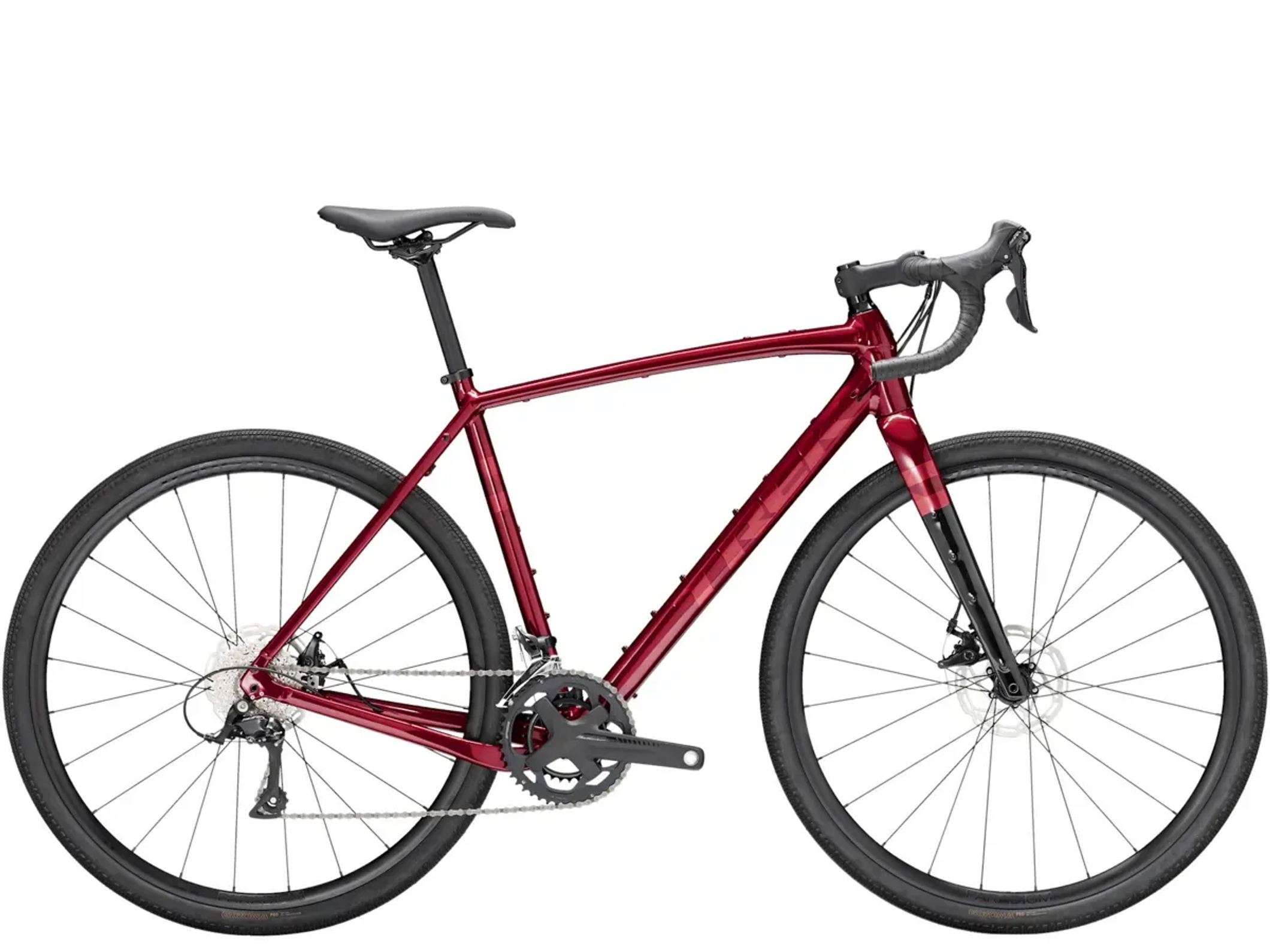
The Trek Checkpoint ALR 3 is one of my favourite entry-level gravel bikes. Built around Trek's 300 Series Alpha Aluminium frame, it comes with a carbon fork, dependable Shimano Sora 2x9 gearing, dual-piston disc brakes, and generous 42mm Bontrager Girona tyres. It is also packed with rack and mudguard eyelets, making it an ideal weekday commuter and weekend trail cruiser.
It retails right on the £1,000 mark (currently on sale at £999 down from £1,190 RRP at Leisure Lakes Bikes at the time of writing).
| Cost Factor | Basic-Rate Taxpayer (20% Tax + 8% NI) | Higher-Rate Taxpayer (40% Tax + 2% NI) |
|---|---|---|
| Bike Retail Price | £1,000.00 | £1,000.00 |
| Gross Monthly Salary Sacrifice | £83.33 / month | £83.33 / month |
| Monthly Tax & NI Saved | -£23.33 / month | -£35.00 / month |
| Net Monthly Cost (Take-Home Pay) | £60.00 / month | £48.33 / month |
| Total Net Paid over 12 Months | £720.00 | £580.00 |
| 7% Extended Use Fee (One-off) | £70.00 | £70.00 |
| Final Net Total Paid | £790.00 | £650.00 |
| Total Real Cash Saved | £210.00 (21% saving) | £350.00 (35% saving) |
If you are a higher-rate taxpayer, you get a £1,000 Trek gravel rig for just £48.33 a month and pocket £350 in pure tax savings. Even as a basic-rate earner, £60 a month is less than a monthly train ticket or a tank of diesel in most parts of the UK.
£1,500 example: Giant Revolt 1 & Specialized Diverge E5 Elite
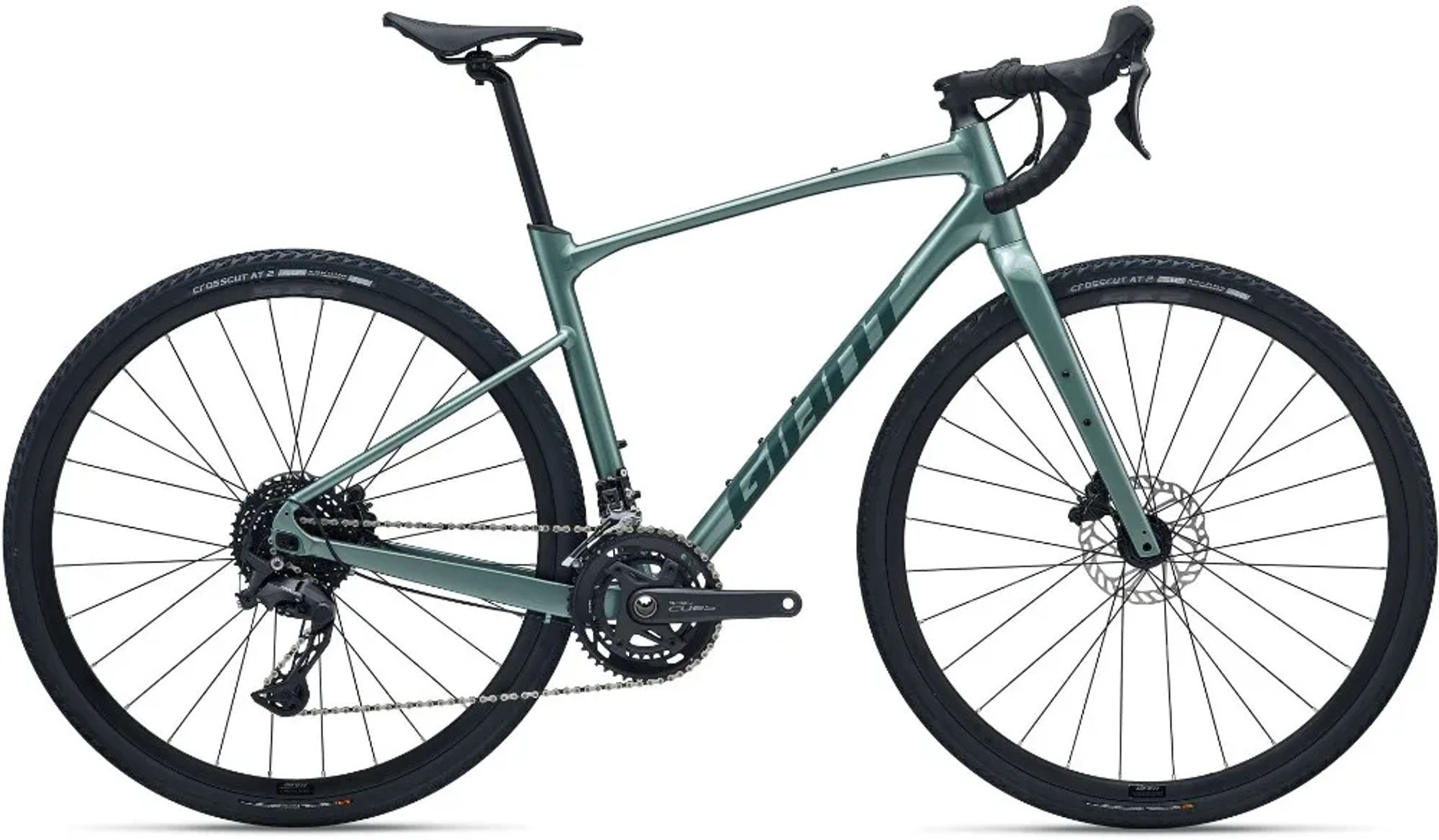
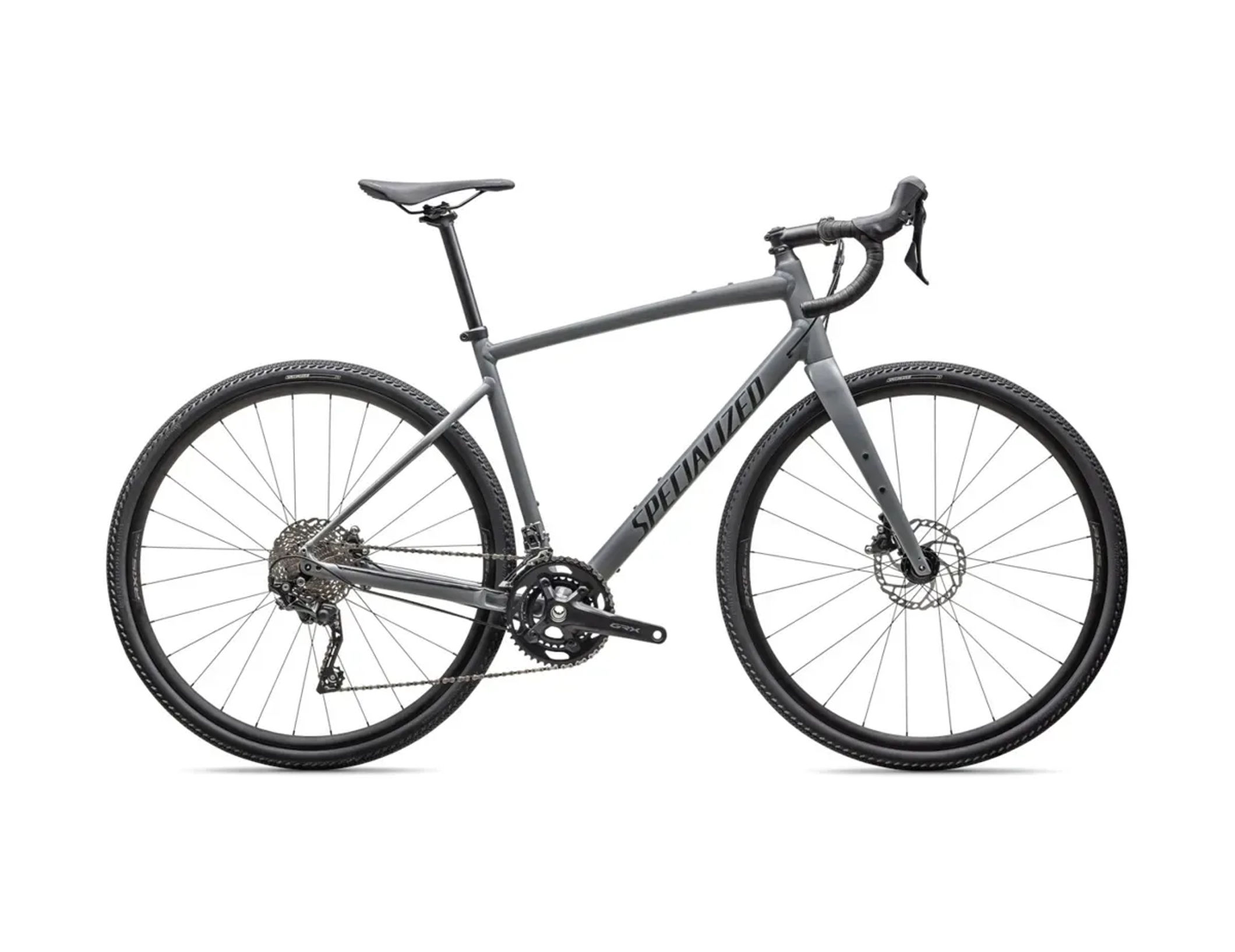
The £1,500 bracket is the undisputed sweet spot in the gravel world. This is where you cross into dedicated Shimano GRX gravel groupsets, hydraulic disc brakes, and lightweight alloy frames engineered for serious off-road abuse.
Two outstanding benchmarks here:
- Giant Revolt 1 (£1,399 at Tredz at the time of writing): Features Giant's ALUXX frame, Shimano GRX 400 2x10 drivetrain, high-power hydraulic brakes, and a clever flip-chip rear dropout that lets you expand tyre clearance up to a massive 53mm.
- Specialized Diverge E5 Elite (£1,499 at Leisure Lakes Bikes at the time of writing): Premium E5 alloy frame, FACT carbon fork, Shimano GRX gearing, and Specialized's renowned endurance geometry.
Let's run the calculation on a £1,500 package:
| Cost Factor | Basic-Rate Taxpayer (28% Relief) | Higher-Rate Taxpayer (42% Relief) |
|---|---|---|
| Bike Package Price | £1,500.00 | £1,500.00 |
| Gross Monthly Salary Sacrifice | £125.00 / month | £125.00 / month |
| Monthly Tax & NI Saved | -£35.00 / month | -£52.50 / month |
| Net Monthly Cost (Take-Home Pay) | £90.00 / month | £72.50 / month |
| Total Net Paid over 12 Months | £1,080.00 | £870.00 |
| 7% Extended Use Fee (One-off) | £105.00 | £105.00 |
| Final Net Total Paid | £1,185.00 | £975.00 |
| Total Real Cash Saved | £315.00 (21% saving) | £525.00 (35% saving) |
On higher-rate tax, paying £72.50 a month for a hydraulic Shimano GRX gravel bike feels almost like daylight robbery. You save over £525 on a brand-new bike.
£2,500 example: Scott Addict Gravel 40 & Orbea Terra M30 Team

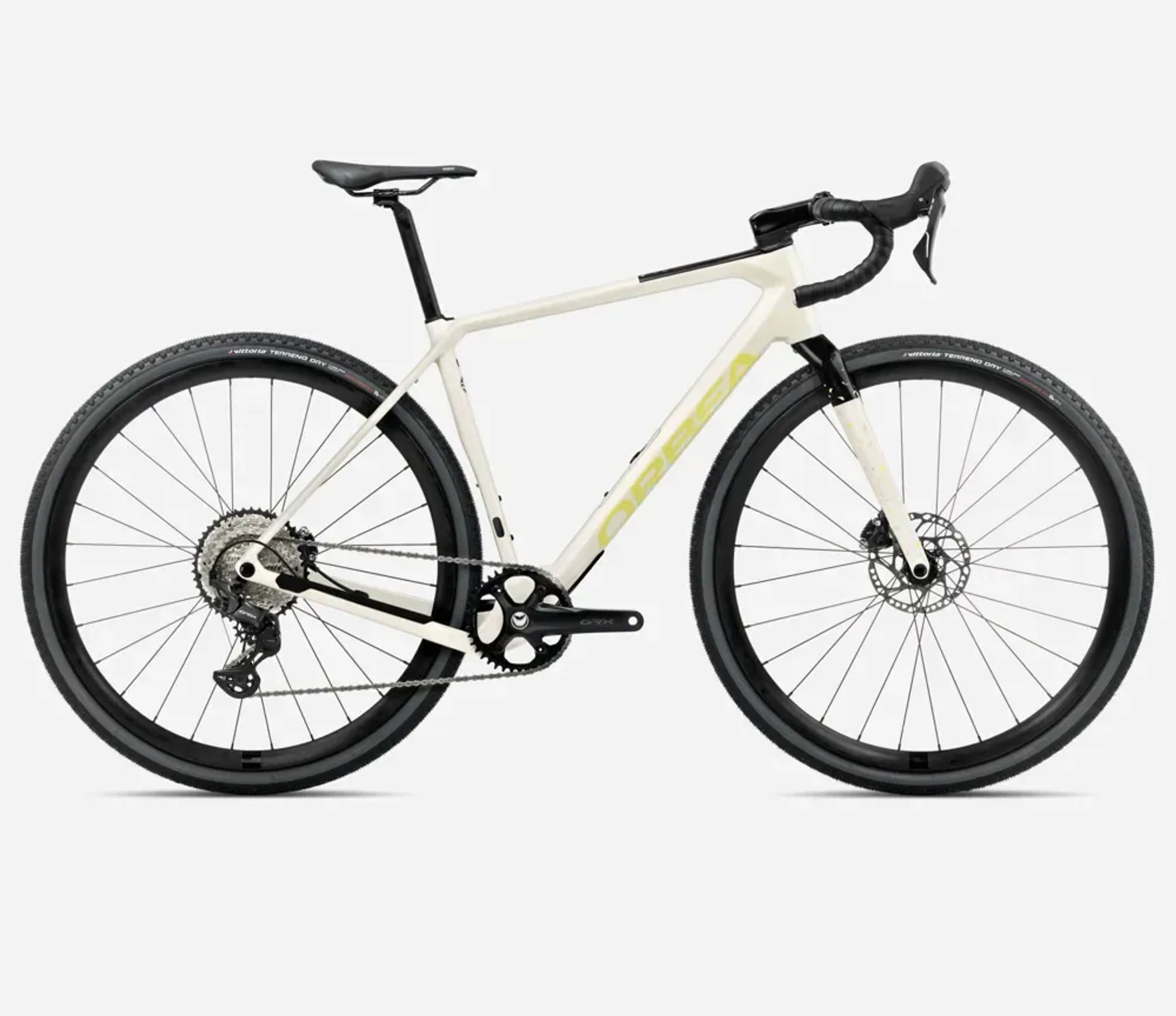
Once you step into the £2,500 realm, you enter the world of lightweight carbon fibre frames, integrated cable routing, and 12-speed gravel transmissions.
Take a look at two prime options:
- Scott Addict Gravel 40 (£2,499 at Tredz at the time of writing): An ultralight HMF carbon race-ready gravel frame with clean integrated cockpit routing and 12-speed Shimano GRX gearing.
- Orbea Terra M30 Team 1X (£2,499 down from £3,499 at Leisure Lakes Bikes at the time of writing): OMR carbon fibre frame equipped with the ingenious internal LOCKR downtube storage compartment for tools and snacks, paired with snappy 1x12 GRX shifting.
Here is how the £2,500 salary sacrifice math breaks down:
| Cost Factor | Basic-Rate Taxpayer (28% Relief) | Higher-Rate Taxpayer (42% Relief) |
|---|---|---|
| Bike Package Price | £2,500.00 | £2,500.00 |
| Gross Monthly Salary Sacrifice | £208.33 / month | £208.33 / month |
| Monthly Tax & NI Saved | -£58.33 / month | -£87.50 / month |
| Net Monthly Cost (Take-Home Pay) | £150.00 / month | £120.83 / month |
| Total Net Paid over 12 Months | £1,800.00 | £1,450.00 |
| 7% Extended Use Fee (One-off) | £175.00 | £175.00 |
| Final Net Total Paid | £1,975.00 | £1,625.00 |
| Total Real Cash Saved | £525.00 (21% saving) | £875.00 (35% saving) |
Think about that for a second. If you pay higher-rate tax, you save £875 in cash on a top-tier carbon gravel bike. That is money that would otherwise vanish straight into the Treasury's general fund.
Side-by-side savings comparison table
To make comparing the price tiers straightforward, here is the complete side-by-side overview (based on package prices at the time of writing):
| Package Value | Tax Band | Monthly Net Cost | Total Paid (12 Mo) | 7% End Fee | Final Net Total | True Cash Savings | Net % Saved |
|---|---|---|---|---|---|---|---|
| £1,000 | Basic (28%) | £60.00 | £720.00 | £70.00 | £790.00 | £210.00 | 21.0% |
| £1,000 | Higher (42%) | £48.33 | £580.00 | £70.00 | £650.00 | £350.00 | 35.0% |
| £1,500 | Basic (28%) | £90.00 | £1,080.00 | £105.00 | £1,185.00 | £315.00 | 21.0% |
| £1,500 | Higher (42%) | £72.50 | £870.00 | £105.00 | £975.00 | £525.00 | 35.0% |
| £2,500 | Basic (28%) | £150.00 | £1,800.00 | £175.00 | £1,975.00 | £525.00 | 21.0% |
| £2,500 | Higher (42%) | £120.83 | £1,450.00 | £175.00 | £1,625.00 | £875.00 | 35.0% |
Which UK bike retailers accept Cycle to Work?
You aren't locked into a single shop. Thousands of bike retailers across the UK accept salary sacrifice certificates. Here are the major ones and the schemes they support:
- Tredz: Accepts Cyclescheme, Halfords Cycle2work, Bike2Work, Vivup, and Green Commute Initiative (applied directly at online checkout).
- Leisure Lakes Bikes: Accepts Cyclescheme, Halfords Cycle2work, Bike2Work, Vivup, and Green Commute Initiative (online and across 16+ UK stores).
- Ribble Cycles: Accepts Cyclescheme, Green Commute Initiative, Bike2Work, Halfords Cycle2work, and Vivup.
- Decathlon: Accepts Cyclescheme and Bike2Work online, plus Green Commute Initiative in-store (voucher must match basket total).
- Tweeks Cycles: Accepts Cyclescheme, Bike2Work, and Green Commute Initiative.
- Halfords: Runs its own Cycle2Work scheme and accepts vouchers in-store, online, and through partner bike shops.
- Evans Cycles: Runs Ride-to-Work, and accepts Cyclescheme, Vivup, Bike2Work, and Green Commute Initiative.
- Sigma Sports: Accepts Cyclescheme (store code SIGMA012), Green Commute Initiative, and Gogeta.
- Canyon: Accepts Cyclescheme and Green Commute Initiative directly at online checkout.
- Alpkit / Sonder: Accepts Cyclescheme, Green Commute Initiative, Halfords Cycle2work, Vivup, and CycleSolutions for Sonder gravel bikes and bikepacking kit (online and in-store).
- Local bike shops: Over 2,000 independent bike shops across the UK participate in Cyclescheme and Green Commute Initiative.
Can you buy discounted sale bikes on Cycle to Work?
In principle, yes, you can buy sale bikes through Cycle to Work. However, scheme administrators (Cyclescheme, Vivup, Halfords Cycle2work, etc.) charge bike shops an administrative commission fee - typically between 8% and 10% of the voucher value - to process the sale.
When a retailer slashes the price of a gravel bike by 30% or 40% on clearance, giving up another 10% to the scheme provider can mean selling the bike below cost.
Here is how major UK retailers handle this:
- Online checkouts (like Tredz and Ribble): Many online checkouts let you test your voucher code directly in the basket. If a sale surcharge applies to a clearance model, you will see it clearly before generating your certificate.
- Physical store networks (like Leisure Lakes Bikes): Across physical stores and phone support, bike shops will happily generate an exact quote for promotional models so your certificate amount matches down to the penny.
My golden tip: Always get a written quote or test the bike in the online basket first before submitting your voucher request to HR so there are no surprises.
Don't forget accessories
You can bundle essential commuting gear into the same tax-free certificate:
- Safety & security: Helmets, Sold Secure Gold/Diamond locks, bells, and child safety seats.
- Commuting essentials: Lights, mudguards, panniers, luggage racks, and waterproof jackets.
- Maintenance & setup: Pedals, pumps, saddle bags, puncture repair kits, and multi-tools.
(Note: Action cameras, cycle computers/GPS head units, turbo trainers, and car bike racks are excluded from tax relief under Department for Transport rules.)
Bundling your lock and lights gets you the exact same 28% to 42% tax relief on the entire bundle.
The 50% commuting rule: will anyone check?
Department for Transport guidance states the bike should be used at least 50% for qualifying work journeys (which includes riding to a train station).
In practice, there are no logbooks, no GPS trackers, and no mileage audits. The government intentionally designed the scheme with minimal red tape. If you commute once or twice a week and ride gravel bridleways or bikepacking routes on weekends, you are completely compliant.
Finding your next gravel bike
Gravel bikes are without question the most versatile bikes you can buy through Cycle to Work. With wide tyres, disc brakes, and comfortable endurance geometry, they chew through potholed British tarmac on weekday mornings, yet have the gearing and clearance to tackle rough gravel fire roads and loaded multi-day bikepacking trips on weekends.
If you are currently comparing models and wondering what you can get for your budget, check out my dedicated comparison tool:
- Compare all UK gravel bikes in my Gravel Bike Finder
- Best gravel bikes under £1,000
- Best gravel bikes under £1,500
- Best gravel bikes under £2,500
Take advantage of your salary sacrifice benefits. It is genuinely the closest thing to free money in British cycling.
Happy riding, and I'll catch you on the trails!
Frequently Asked Questions
Official sources & references
- [1] Department for Transport - Cycle to Work Scheme implementation guidance for employers
- [2] HM Revenue & Customs - EIM21667A - Simplified approach to valuing cycles sold to employees
- [3] HM Revenue & Customs - Expenses and benefits: bikes for employees
- [4]
- [5]