Firepot dehydrated meals review: Are they worth the premium price tag?
An honest review of Firepot dehydrated meals for bikepacking and gravel adventures. Are these premium, calorie-dense adventure food pouches actually worth the price tag?
There is a specific moment at the end of a long day of gravel riding where your energy tanks completely empty. You've found the perfect wild camping spot, the bike is leaning against a tree, and your stomach is making noises loud enough to scare off the local wildlife. In those moments, the last thing you want to do is chop ingredients or scrub a messy pot.
Enter Firepot. If you've spent any time browsing backpacking food aisles, you've probably seen these brown paper pouches. They are notoriously a bit more expensive than standard camping fare - a single pouch sits right around the £10.49 mark - but they promise something different: real, slow-cooked food that has been dehydrated, rather than freeze-dried chemical mush.
I finally picked some up to see if they live up to the hype, focusing purely on the highest-calorie options - because when you're bikepacking, calories are currency. Here is my honest take on whether they deserve a spot in your bikepacking bags.
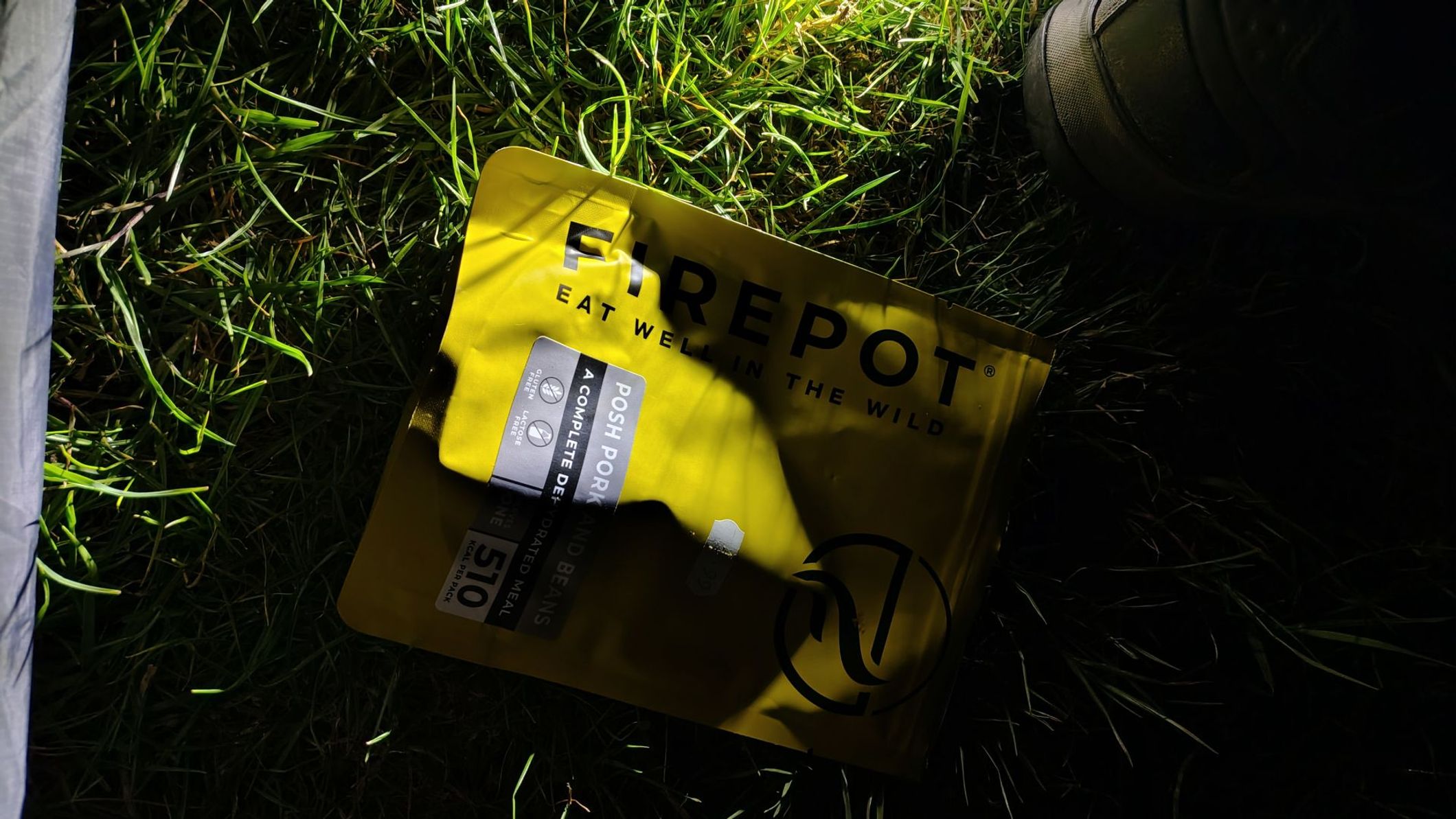
The contenders: Firepot Posh Pork & Beans vs Orzo Pasta Bolognese
When you are burning thousands of calories on the trails, you need sheer energy density. Firepot brilliantly offers two main portion sizes for almost their entire range: Regular Serving (135g) and Extra Large Serving (200g).
To maximize my fuel-to-weight ratio, I dug into the stats of two of their heaviest hitters:
- Posh Pork and Beans: This isn't your standard supermarket tin. It's a rich, smoky blend of three types of beans, British pork, and potato cubes. The regular size (135g) hits a respectable 510 kcal, but if you opt for the Extra Large (200g), it bumps up to a massive 755 kcal of slow-release trail energy.
- Orzo Pasta Bolognese: A classic comfort meal made with high-quality British beef mince, oregano, and star-shaped orzo pasta instead of standard spaghetti (making it much easier to eat out of a pouch). This one is an absolute powerhouse for recovery. The regular pouch starts at 635 kcal, while the Extra Large version punches all the way up to 940 kcal.

First impressions: Taste, texture, and how to eat Firepot meals
I was genuinely surprised by the quality here. Usually, dehydrated meals suffer from two major flaws: they are either incredibly bland or they turn into a homogenous, slimy paste.
Firepot is entirely different. The texture feels like a meal you actually cooked at home from scratch. The mince in the Bolognese feels like real meat, and the vegetables still retain a bit of bite. Taste-wise, they don't skimp on the seasoning. They are warm, slightly spicy, deeply savory, and taste like genuine, comforting food. Eating one of these in a tent feels like a luxury reward rather than a survival chore.
When it comes to actually eating it, simplicity rules. You eat it straight from the pouch - no plates, no bowls, and zero cleanup. Ideally, a long-handled camping spoon is the perfect tool for the job so you can scrape the bottom corners of the bag without getting sauce all over your knuckles. However, if you forget your specialized gear, don't panic; a regular large tablespoon from my kitchen drawer did the trick perfectly.

The broader Firepot menu: Vegan, vegetarian, and gluten-free options
While I opted for the meat-heavy, high-calorie options, browsing their full line reveals a massive variety. They haven't just thrown in a token vegetarian option; Firepot has a brilliant range of vegan, vegetarian, and gluten-free meals.
If you don't eat meat, you can tuck into things like their Vegan Orzo Bolognese (which uses a clever protein-packed soya TVP mince instead of beef), Dal and Rice with Spinach, Smoky Tomato Paella, or a hearty Porcini Mushroom Risotto. They even cover breakfasts with options like Baked Apple Porridge. It's safe to say no matter your dietary requirements, you won't be left starving on the trail.

A crucial bit of advice for camp preparation
Preparing these is incredibly straightforward, but it requires patience. You open the pouch, pour in about 300ml to 400ml of boiling water (there is a handy line on the inside of the packet), seal it up, and wait. Because Firepot uses real, whole ingredients rather than highly processed powders, it takes at least 15 minutes to fully rehydrate.
Here is where you can learn from my mistake. On my first try, it was getting late, I was starving, and I pitched my entire tent before boiling the water. I ended up sitting on a log for 15 agonizing minutes just staring at a sealed bag while my stomach rumbled.
Pro tip: The moment you stop to camp, get your camping stove out first. Boil the water, pour it into the Firepot bag, stir it, and zip it shut. Then go stretch your legs, pitch your tent, and inflate your sleeping mat. By the time your camp is perfectly set up and you're ready to relax, your hot, delicious dinner will be perfectly hydrated and ready to eat.
Is Firepot worth the price?
Let's be honest - at over £10 a pop, these aren't budget meals. If you are on a shoestring budget, a packet of cheap noodles and a tin of tuna will always be cheaper.
But if you value easy camp prep, want to pack light, and refuse to compromise on food quality after a brutal day on the trails, Firepot is absolutely worth it. The ingredients are clean, the shelf life is incredibly long (making them great to hoard in your kit cupboard), and they genuinely taste amazing.
If you spot them on offer, don't think twice - buy a handful of them. They are widely available online via retailers like Alpkit, local outdoor shops, and Amazon.
Where to buy Firepot dehydrated meals
You can buy Firepot meals online directly:
- Check the price and available flavors on Amazon here